

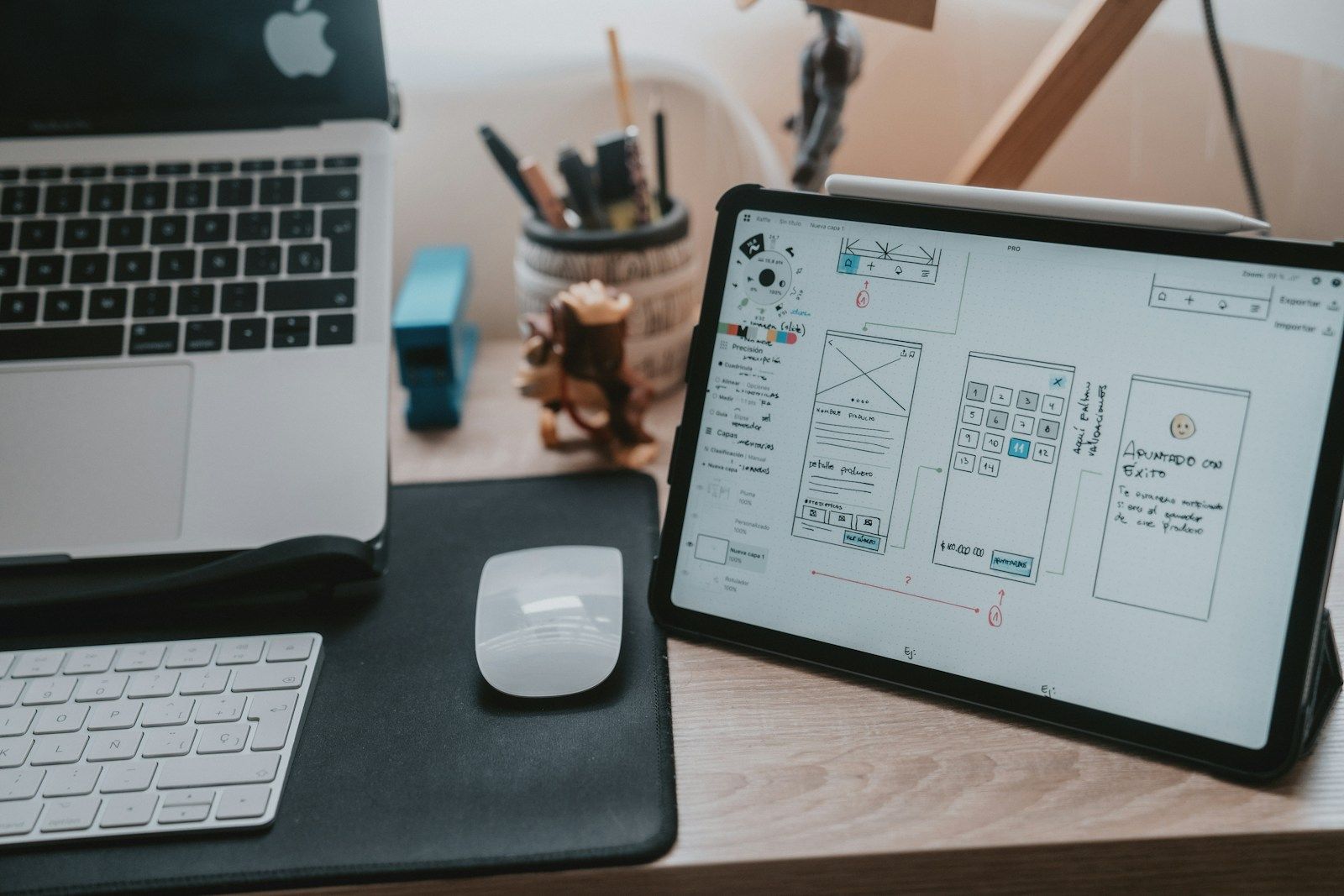

We have officially entered the AI era, and with it has come a wave of sameness. The web, once a space for creativity, is now filled with similar-looking apps and websites. We are losing the “creative thumbprint”, that unique mark left by designers who dare to push boundaries.
Today, developers and even designers are leaning heavily on AI-assisted or fully AI-generated workflows. While efficient, AI is a mirror; it can only reflect the data it has been fed. Because frameworks like React and Tailwind CSS dominate the current market, AI naturally defaults to these libraries and frameworks. The result? A web where you often have to check the logo in the corner just to remember which tab you’re looking at.
The Rise of “Vibe Coding” and Standardized Boredom
This isn’t a brand-new phenomenon. The web’s “homogenization” started years ago when developers began overusing Bootstrap, often without customizing the default blue color. However, AI has accelerated this decline.
The emergence of “vibe coding,” where code is generated rapidly and cheaply with little human involvement, leads to important customizations being overlooked. When the effort to produce an UI is near zero, the incentive to innovate vanishes. We are left with a web that feels mass-produced rather than handcrafted. (In the past, you were proud to create a thing with your bare hands.)
Design as a Creative Process (Not a Prompt)
Web design and UX are creative disciplines guided by data, not dictated by it. You can’t create something truly original if you let a machine replicate patterns from a limited set of existing data.
I miss the era when, instead of jumping straight into a code editor, we started with moodboards, analog inspiration, and experimentation. Resources like CSS Zen Garden were revolutionary, proving that the same HTML structure could be transformed into infinite artistic expressions through CSS alone. In the mid-2000s, galleries like CSSMania and CSSRemix showcased a “Web 2.0” aesthetic. While we’ve moved past pixel fonts of the late 90s and early 2000s and heavy skeuomorphism for good reasons, we’ve also discarded the spirit of creativity that came with them. We are currently “suffering” from a decade of Flat Design that has reached its logical, boring conclusion.
The Trap of “Aesthetic-Only” Galleries
While design galleries still exist, they’ve shifted. Most featured sites today are built to “wow” an audience with flashy animations rather than to provide a functional, high-quality user experience. They are digital art pieces that are impressive to look at, but often impractical for a real-world client or product.
If you browse the WayBack Machine, you’ll see that early web designs were intensely unique. There is still a wealth of inspiration to be found in the archives of the early web, where designers were forced to be clever with limited technology.
UX is Radical Problem Solving
UX is fundamentally about solving problems, but we’ve climbed into a “comfort zone” that prevents us from finding the best solutions. By letting AI design a generic front-end, we aren’t providing a superior experience; we’re creating “just another app” that a user will visit once and forget.
True UX innovation requires us to look at an existing pattern, ask “How can we make this better?”, and then test that hypothesis with real humans.
Back to Basics: Finding the Next “Pull-to-Refresh”
To break the cycle of sameness, we must re-incorporate foundational research and inspiration tools into our workflow:
- Moodboards: These aren’t just for interior designers. They provide a “North Star” for a project’s visual language and color palette before a single component is built.
- Research-Backed Decisions: I frequently recommend the Interaction Design Foundation and NN/Group. These resources help us understand the why behind a design, allowing us to break the rules effectively rather than following them blindly.
- Evolving Interactions: Familiar patterns are good for usability, but they shouldn’t be a ceiling. Interactions we take for granted today like pull-to-refresh or swipe-to-action were once innovations. If we stop experimenting, we stop evolving.
Conclusion
The influx of AI-generated, framework-dependent design threatens to turn the web into a utility rather than an experience. While consistency offers familiarity, stagnation kills progress.
To ensure the future of the web is one of genuine improvement, we must resist the path of least resistance. We need to reclaim the design process, use tools like moodboards to establish a unique direction, and view UX as an exercise in radical problem-solving. It’s time to embrace the uncomfortable task of evolving user interactions and find the next “pull-to-refresh” moment that defines a truly original digital experience.